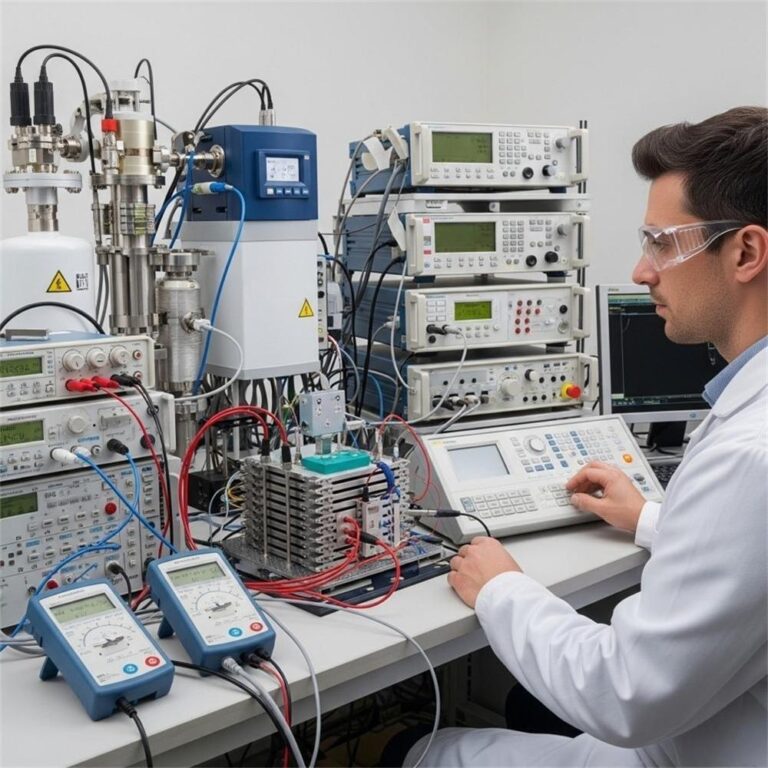
For equipment OEMs, research-project buyers and hydrogen system integrators: a custom PEM electrolyzer project needs agreed engineering outputs at each stage. Start by defining whether you are purchasing an electrochemical stack, an integrated hydrogen-generation system or a project-specific package.
Hele Titanium supports PEM stack and system discussions, including OEM/ODM requirements. The milestones below provide a framework for agreeing scope, responsibilities and acceptance; the actual schedule and deliverables belong in the project proposal.
Explore PEM stacks · Explore complete systems · Discuss a custom project
Stage 1: Define the purchase and success criteria
Provide the application, destination, required hydrogen demand, gas quality at the delivery point, pressure, operating profile and available utilities. Explain the project stage and target delivery. If a requirement is unknown, identify who will determine it instead of assigning an unverified number.
Separate essential requirements from preferences. A university pilot and an OEM product-development programme can have different needs for data access, drawings, repeat orders and integration support.
Stage 2: Review feasibility and freeze the interface
Review equipment boundaries before freezing the design. Identify supplier-supplied and purchaser-supplied items, mechanical mounting, electrical connections, water and cooling services, gas treatment, communications and protection responsibilities. Record drawing revisions and how later changes will be approved.
| Gate | Buyer input | Output to agree |
|---|---|---|
| Requirements review | Application, duty, destination and site information | Requirements list, assumptions and open questions |
| Configuration review | Priority requirements and integration constraints | Equipment list, options, exclusions and interface responsibilities |
| Design freeze | Approved interfaces and acceptance requirements | Controlled specification and drawing revisions |
| Prototype or first unit | Agreed test programme and review participants | Test records, deviations and actions to close |
| Delivery release | Acceptance of agreed deliverables | Release record, shipment documents and handover plan |
Stage 3: Specify prototype testing before manufacture
Define what the prototype must demonstrate, under which conditions and with what measurement records. Distinguish stack-level tests from tests of the completed package. Agree the treatment of nonconformities and the decision process for changes.
Do not treat a generic purity, lifetime, response-time or efficiency statement as the acceptance basis. The selected model and configuration need documented operating conditions and agreed performance criteria.
Stage 4: Agree the commercial scope and delivery dependencies
The quotation should identify the equipment configuration, included engineering work, documentation, options, exclusions, delivery basis and validity. Confirm commissioning, training, warranty, spare-parts support and any destination-specific documentation separately.
Lead time depends on design approval, component availability, testing, documentation and site readiness. Request a project schedule with dependencies rather than assuming one standard delivery promise applies to every custom order.
Stage 5: Plan handover and repeat production
- Identify the supplied equipment and its approved specification revision.
- Agree the drawings, test records and manuals delivered with the order.
- Define installation and commissioning responsibilities and the support channel.
- Record recommended spare parts, maintenance information and warranty boundaries.
- For OEM programmes, agree how design changes and replacement-part compatibility are managed between batches.
Review our company and manufacturing information and engineering and after-sales support. Request evidence applicable to your actual model and supply scope.
Questions before starting an OEM project
Can we begin with a prototype?
Describe the intended experiment or product and the quantity required. Prototype scope, validation and commercial terms need project-specific agreement.
Who accepts the finished system?
Identify the buyer’s technical representative and the party responsible for system integration. Agree factory and site acceptance responsibilities before production.
Can a published reference model be modified?
Use it as a starting point for a feasibility discussion. A requested change is not confirmed until its technical implications, cost and schedule are reviewed.
Start a scoped OEM development discussion
Send your company or institution, application, preferred stack or system, required output, gas quality, pressure, available utilities, project stage, quantity and target schedule. Attach the relevant requirements or interface drawing and mark information that is still provisional.
Published by Hele Titanium Hydrogen. Updated 17 October 2026. Final capabilities, performance, commercial terms and deliverables are confirmed in the approved project documents.