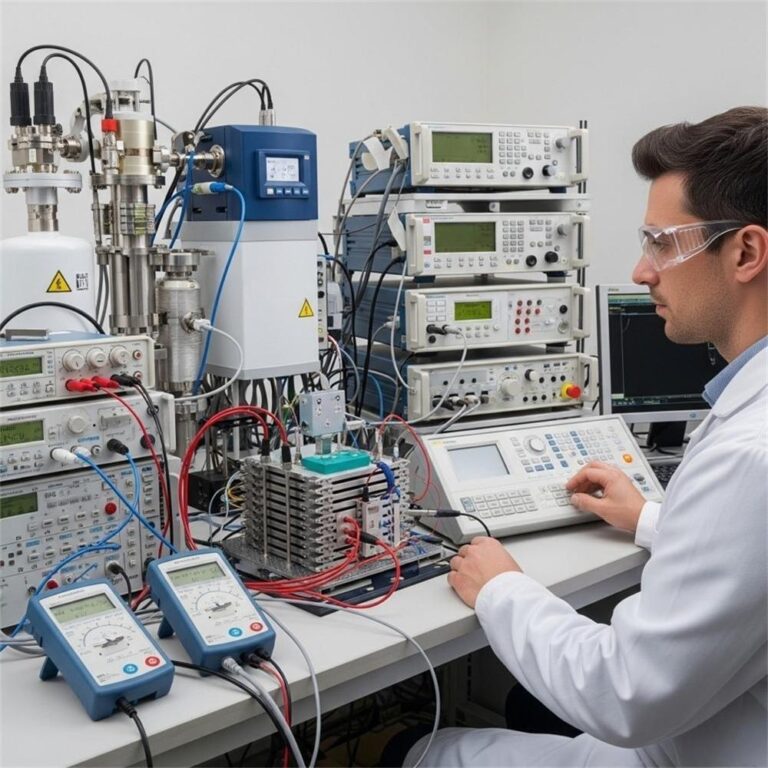
A hydrogen purity percentage alone does not establish compatibility with a laboratory instrument. Procurement needs a gas specification at a defined delivery point, including the impurities that matter to the method. Confirm the instrument maker’s requirements before choosing the generator and gas-treatment configuration.
This guide focuses on gas quality. Use the separate laboratory equipment specification checklist for flow, utilities, space and project scope.
1. Start with the instrument and analytical method
Obtain the current gas requirements for the exact instrument, inlet, detector or process. Record whether hydrogen serves as fuel, carrier gas, a reaction gas or another utility. Do not transfer a specification from one use to another merely because both use hydrogen.
For example, Agilent’s carrier-gas conversion guidance addresses individual water and oxygen levels as well as overall hydrogen purity. It is instrument guidance, not evidence that a HELE configuration is compatible with an Agilent system.
2. Turn a purity claim into a verification sheet
| Item | Question for the supplier | Record in the acceptance plan |
|---|---|---|
| Overall purity | What is specified for this model and configuration? | Value, basis and operating conditions |
| Named impurities | Which relevant contaminants are individually limited? | Limits, units and analytical method |
| Moisture | Is water specified as concentration or dew point? | Reporting basis and measurement pressure |
| Sampling point | Is the sample taken at the stack, treatment outlet or user connection? | Drawing reference and sample path |
| Operating state | Does the data cover start-up and the intended load range? | Stabilisation criteria and tested conditions |
| Evidence | Is the result a model specification or a test of the supplied unit? | Report identity, date and equipment reference |
3. Match the delivered package to the specification
Ask which gas separation, drying, purification, monitoring and pressure-regulation components are included in the offer. Identify consumables and their service requirements. A specification for a configured generator should not be attributed to an unconditioned stack outlet.
Define the delivery boundary on a drawing. Downstream installation and sampling arrangements also need review by the laboratory and instrument supplier. Agree who supplies and checks those items before a gas-quality requirement is accepted.
4. Make test evidence comparable
A useful report identifies the equipment, configuration, operating point, gas pressure, sampling arrangement and measurement method. Check that the method can resolve the required impurity limits. A rounded percentage in a brochure is insufficient evidence for a much smaller individual contaminant limit.
For an OEM project, keep the requirement and test record under revision control. If gas-treatment components, settings or the downstream instrument change, review whether the earlier acceptance evidence remains applicable.
5. Close compatibility questions before purchase
Ask the instrument or process owner to approve the required gas specification and any conversion of the analytical method. Agree responsibility for method validation, start-up checks and ongoing quality monitoring. Do not assume a generator purchase alone validates an analytical application.
Review our laboratory hydrogen equipment and request configuration-specific information. Where the required evidence is not available, leave compatibility open rather than recording an unsupported approval.
Request a gas-quality and application review
Send the instrument or process identity, manufacturer gas requirements, individual impurity and moisture limits, delivery pressure, flow profile, sampling expectations and destination. Include any proposed gas-treatment equipment.
Published by Hele Titanium Hydrogen. Updated 17 October 2026. No universal analytical-instrument compatibility or gas-purity guarantee is made by this guide.