Start an OEM laboratory hydrogen generator enquiry with a user requirement specification, not a purity headline. Record what the experiment needs at its actual gas connection, how demand changes and who will approve the installation. This helps distinguish a research gas supply package from a bare electrolyzer stack.
This checklist is for universities, research institutes and laboratory equipment integrators. Review the laboratory hydrogen generator range before requesting a configuration; suitability must be confirmed for the selected model and experiment.
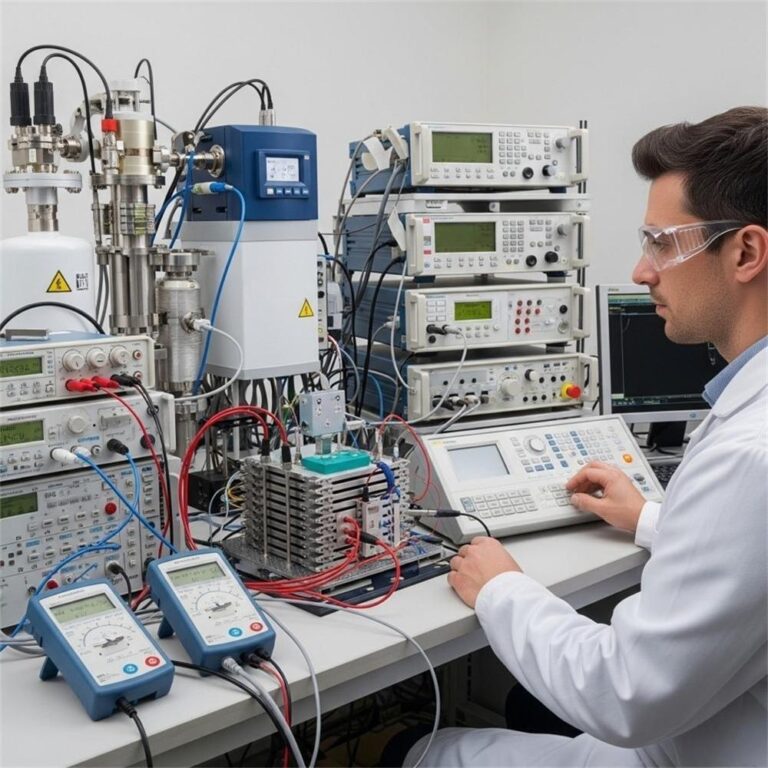
Cover illustration: conceptual scene; configuration varies by project.
1. Define the experiment and demand profile
Name the research process or instrument, its manufacturer and model, and whether hydrogen is used as a reactant, fuel, process gas or carrier gas. Attach the instrument supplier’s gas specification where applicable. A generator suitable for one research task is not automatically suitable for every analytical instrument.
Separate steady flow, peak flow and peak duration. State the number of simultaneous users, daily operating schedule, start-stop pattern and whether a supply interruption would invalidate a test. Record flow reference temperature and pressure so different capacity figures can be compared.
2. Use one controlled requirement sheet
| Requirement | Buyer input | Evidence or agreement needed |
|---|---|---|
| Use point | Experiment, instrument and gas connection | Instrument or process specification |
| Demand | Steady and peak flow, duration, simultaneous users | Demand schedule with reference conditions |
| Delivered gas | Purity, named impurities, moisture and outlet pressure | Model-specific gas specification and test method |
| Utilities | Electrical supply, water, cooling and drains available | Installation requirement drawing |
| Installation | Room, footprint, access, ventilation and exhaust provisions | Site review by the responsible laboratory team |
| Interfaces | Fittings, pressure regulation, signals and data needs | Interface list and responsibility allocation |
| Acceptance | Required tests, records, manuals and training | Agreed acceptance plan before order |
3. Resolve site constraints before selecting options
List usable dimensions rather than only the available bench length. Include access for maintenance, equipment removal, water replenishment and service connections. If noise or heat release matters to the experiment, ask for values and measurement conditions for the proposed configuration.
Assign the laboratory’s facilities and safety teams to review installation arrangements. Follow the selected manufacturer’s installation requirements. The DOE hydrogen safety resources provide background for planning the review. This specification worksheet does not replace a site-specific safety review.
4. Separate the purchase scope from the laboratory’s work
Identify who supplies gas treatment, downstream tubing, regulators, gas analysis and any external utilities. State whether the enquiry concerns a standard unit, a configured unit or development of an OEM assembly. Discuss quantities and repeat orders separately from the first prototype requirement.
For gas-quality decisions, use our purity and instrument-fit checklist. For an integrated development project, include the OEM RFQ information sheet.
5. Agree how acceptance will be demonstrated
Write a measurable acceptance condition for each essential requirement. Identify the test configuration, sampling point, records and responsible reviewer. An equipment delivery check, a factory test and validation of the laboratory method answer different questions; define the required handover for each.
Discuss your laboratory requirement sheet
Send your institution or company, research application, instrument model if relevant, steady and peak gas demand, required gas quality and pressure, utilities, destination and project schedule. Mark any requirements that are still open.
Published by Hele Titanium Hydrogen. Updated 17 October 2026. Product compatibility and performance require confirmation for the proposed model.