Repeat OEM supply needs a controlled equipment configuration. A replacement component, interface revision or software change can affect the records and support required for installed equipment. Agree how changes are reviewed, approved and communicated before placing repeat or spare-parts orders.
This guide focuses on configuration control after the initial design is established. For production records, use the inspection and traceability checklist.
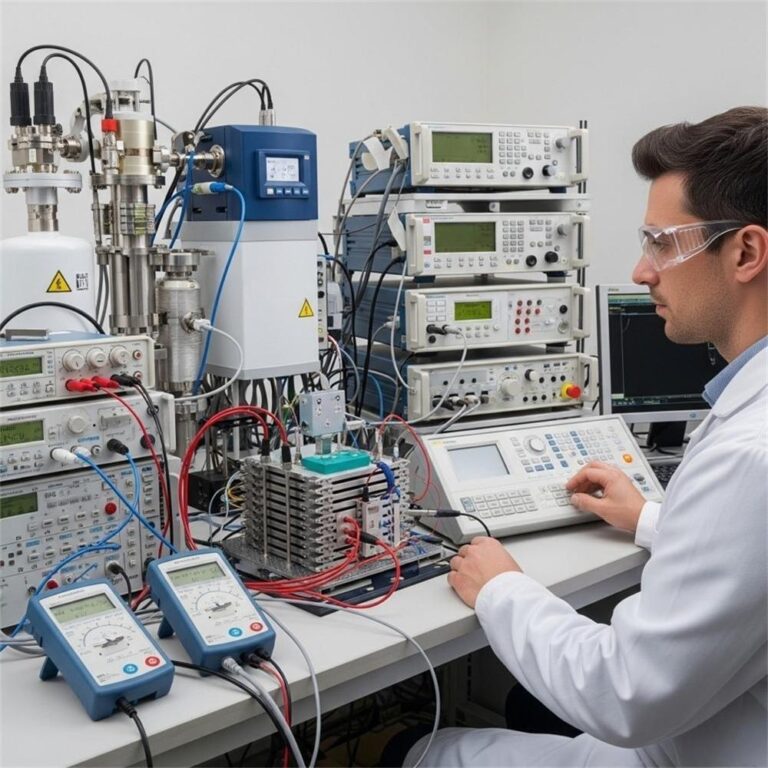
Cover illustration: conceptual scene; configuration varies by project.
1. Establish the accepted baseline
Identify the product model, bill of materials or assembly reference, mechanical and electrical interfaces, software or settings revisions where relevant, and the accepted specification. Link those records to the equipment serial number or defined production range.
Clarify which information is supplied to the OEM and which remains controlled by the manufacturer. The agreement should still allow the parties to identify what was delivered and obtain compatible service parts.
2. Use a documented change request
| Record field | Information needed | Decision to document |
|---|---|---|
| Change identity | Request number, reason and proposed revision | Who owns the review? |
| Old and new items | Part or assembly identity and affected documents | What is changing? |
| Affected equipment | Models, orders, serial ranges and installed units | Where does the change apply? |
| Technical impact | Fit, function, limits, interfaces and relevant performance | What review and testing are required? |
| Verification | Evidence needed before release | Who approves acceptance? |
| Commercial impact | Cost, schedule, stock and support consequences | What terms or plans must change? |
| Release and communication | Effective date, updated records and recipient list | How will implementation be controlled? |
3. Review substitutions before use
A part described as equivalent should be assessed against the actual requirement. Matching a connection size or catalogue rating alone does not establish compatibility with the equipment configuration.
Have the responsible engineering team determine whether the change affects operating limits, gas quality, controls, service instructions or applicable conformity evidence. Agree any validation and commissioning checks before release. Keep safety-related work within approved procedures.
4. Order spare parts against equipment identity
Provide the equipment model, serial number, configuration revision, required part and relevant photographs or records. Ask whether the offered replacement is directly compatible, requires an approved kit or needs additional engineering review.
Confirm availability, storage information and who is authorised to fit the item. Do not assume every revision is interchangeable or that recommended spares are stocked in the destination country.
5. Maintain the installed-equipment record
After an approved change, update the as-built parts list, drawings, manuals and service records as required. Keep replaced and current identities visible so later orders do not revert to an obsolete configuration.
Agree how end-of-life notices, last-order opportunities and replacement proposals will be handled. Review the OEM service and spare-parts readiness checklist and service information when planning repeat supply.
For new development rather than a controlled change, use the prototype and handover process to establish a fresh acceptance baseline.
Discuss a configuration change or replacement requirement
Send your company, equipment model and serial reference, current configuration, required part or change, reason, destination and timing. Include relevant drawings or records that you are authorised to share.
Published by Hele Titanium Hydrogen. Updated 17 October 2026. Compatibility, availability and permitted service work require equipment-specific confirmation.