
HYDROGEN TO POWER / TEACHING SYSTEM
Hydrogen Fuel Cell Demo System
Make fuel-cell power generation observable.
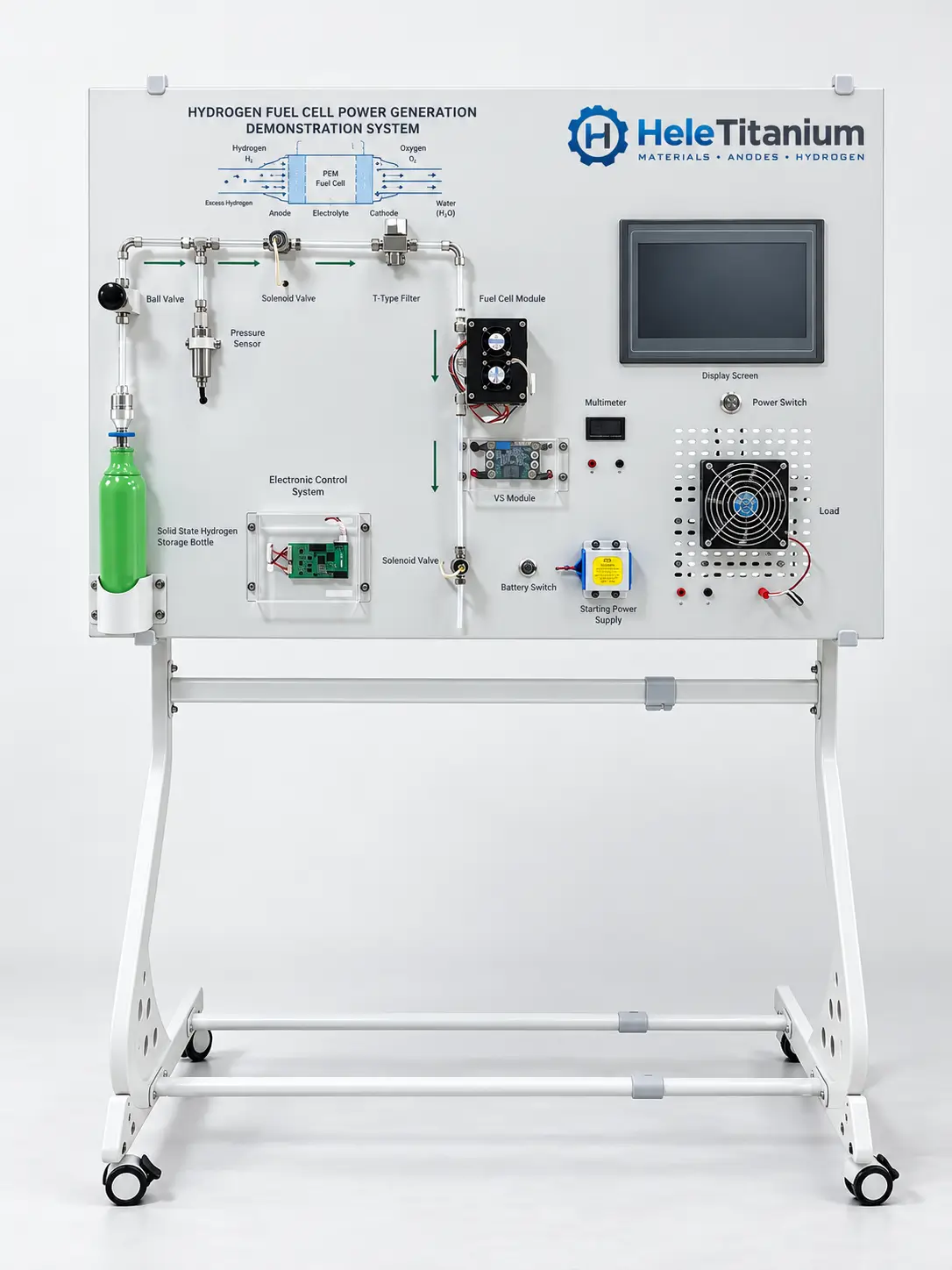
Follow stored hydrogen through pressure regulation, a PEM fuel cell, power management and an electrical load. Build lessons around output, load response and measured hydrogen use.
200 W
19.8 V / 10.2 A
≥45%
PURPOSE & VALUE
Laboratory Hydrogen Supply Applications
Make fuel-cell power generation observable.
This demonstration system focuses on converting hydrogen into electricity. Its teaching value comes from connecting the fuel-supply conditions with the electrical response and data record. Define the hydrogen source, pressure regulation, load equipment and measurement scope together rather than selecting only by power class.
Follow the hydrogen-to-electricity pathway
Connect the storage module, regulated supply, fuel cell and electrical load in a clear process sequence. Keep the pressure limits of each subsystem distinct.
Explore load and consumption behaviour
Plan start-up, load-response and energy-balance exercises using the actual included instruments. Theoretical consumption values should remain separate from measured results.
Prepare a complete learning package
Specify the load range, accessible measurements, student worksheets, operating instructions and instructor responsibilities in the quotation.
PROCESS & INTEGRATION
Understand the equipment pathway.
TECHNICAL DETAILS
Reference technical specifications.
Reference data for configuration review. The accepted quotation and approved technical specification define the supplied equipment.
| Category | Parameter | Unit | Technical Specification |
|---|---|---|---|
|
Solid-State Hydrogen Storage |
Cylinder Diameter |
mm |
60 |
|
Cylinder Height |
mm |
258 |
|
|
Weight |
kg |
1.5 |
|
|
Hydrogen Storage Capacity |
g H₂ |
>22 |
|
|
Hydrogen Filling Pressure |
MPa |
1.0 |
|
|
Continuous Hydrogen Discharge Pressure |
MPa |
0.6 |
|
|
Hydrogen Discharge Rate |
L/min |
>4 |
|
|
Fuel Cell |
Reference Power Class |
W |
200 — confirm final model |
|
Rated Voltage |
V |
19.8 |
|
|
Rated Current |
A |
10.2 |
|
|
Reference Efficiency |
% |
≥45 |
|
|
Hydrogen Supply Pressure |
MPa |
0.035–0.05 |
|
|
Hydrogen Purity Requirement |
% |
≥99.99 H₂; CO ≤1 ppm |
|
|
Theoretical Hydrogen Consumption at Rated Power |
L/min |
2.89 |
|
|
Theoretical Air Consumption at Rated Power |
L/min |
114.6 |
|
|
Bare Stack Weight |
kg |
1.43 |
|
|
Demonstration System |
Dimensions Excluding Bracket (L × W × H) |
mm |
1200 × 700 × 276 |
|
Weight Excluding Bracket |
kg |
15 |
|
|
Weight Including Bracket |
kg |
25 |
Configuration note. The storage discharge rating of 0.6 MPa differs from the fuel-cell inlet requirement of 0.035–0.05 MPa. Confirm pressure regulation. Efficiency is a reference value; the listed consumption figures are theoretical.
APPLICATIONS
Where this configuration fits.
Fuel-cell courses
Observe electrical generation from a controlled hydrogen supply.
Electrical and energy training
Relate voltage, current and load to system behaviour.
Laboratory demonstrations
Record operating data and discuss energy-conversion boundaries.
BEFORE YOU REQUEST A QUOTE
Prepare a useful equipment brief.
01 / Hydrogen supply
Source, refill method, purity and regulated cell-inlet pressure
02 / Electrical load
Experiment power range and required load equipment
03 / Measurements
Voltage, current, gas consumption, temperature and data logging
04 / Teaching package
Course objectives, manuals, supervision and acceptance exercise
BUYER QUESTIONS
Questions before specification.
Is the storage discharge pressure the fuel-cell inlet pressure?
No. The reference storage discharge is 0.6 MPa, while the fuel-cell supply requirement is 0.035–0.05 MPa. Confirm the pressure-regulation arrangement.
Does the system make its own hydrogen?
Hydrogen production is a separate scope unless expressly included. Review the electrolysis/storage teaching system if generation is part of the course.
Is the reference efficiency a guaranteed course result?
No. Confirm the efficiency definition, measurement boundary and operating point. Student results depend on the approved experiment and supplied measurements.
Are the published gas-consumption values measured test results?
The reference table identifies them as theoretical. Request measured acceptance evidence if it is required by the purchase specification.
NEXT STEP / CONFIGURATION REVIEW
Tell us what the equipment needs to do.
Send your application, destination country and technical requirements. Include the delivery target and any drawings or procurement specification so the proposed scope can be reviewed against your project.
Please name the product family in your enquiry. Final technical values, documentation and delivery terms belong in the approved quotation.
Your enquiry checklist
- Hydrogen supply: Source, refill method, purity and regulated cell-inlet pressure
- Electrical load: Experiment power range and required load equipment
- Measurements: Voltage, current, gas consumption, temperature and data logging
- Teaching package: Course objectives, manuals, supervision and acceptance exercise