
PEM STACKS / OEM INTEGRATION
PEM Electrolyzer Stacks
The electrochemical core of your hydrogen system.
Select a stack platform around output, electrical duty and system interfaces. Compare reference modules from micro-flow research applications to larger industrial projects.
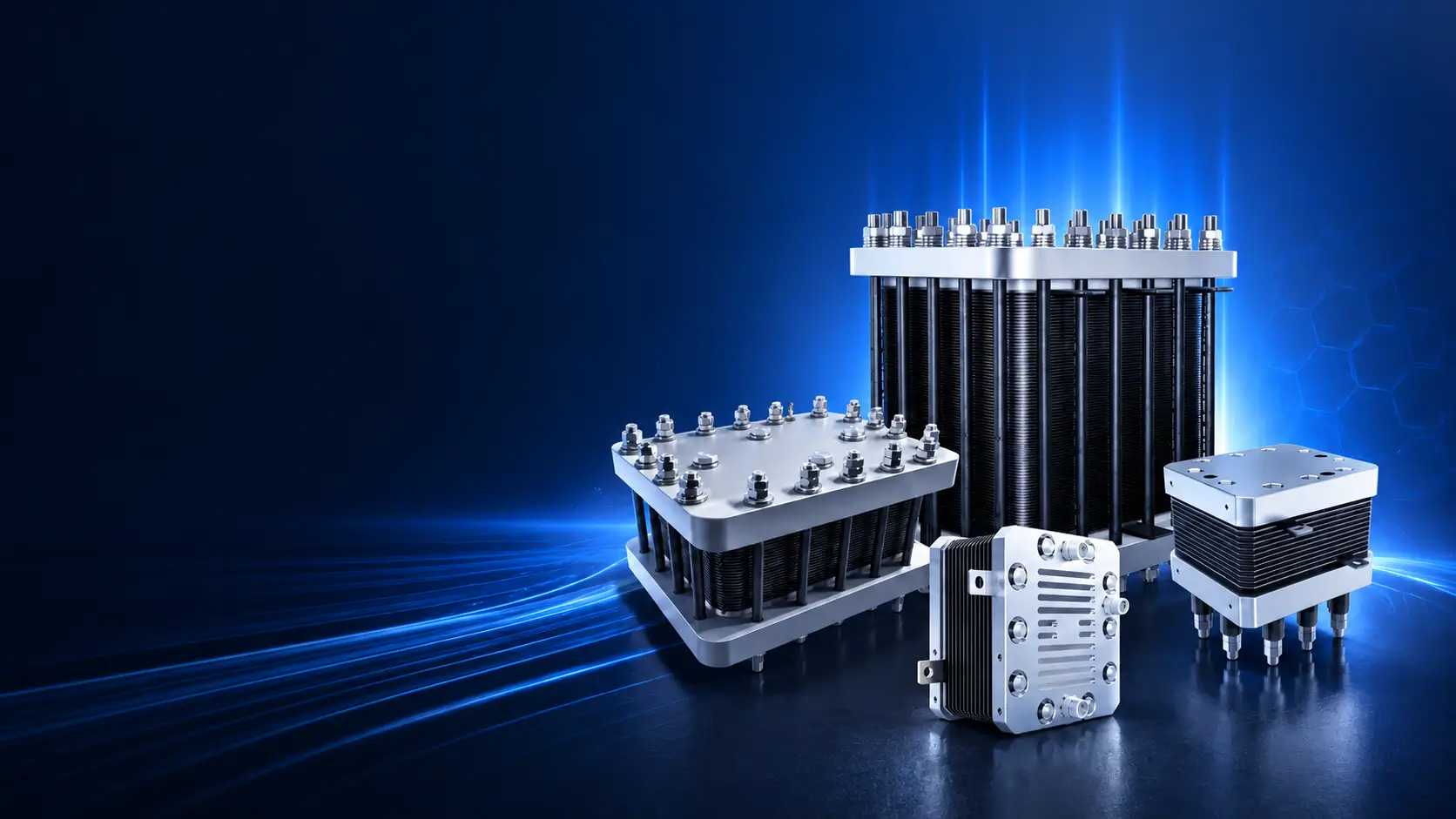
8 groups
OEM scope
Model-specific
PURPOSE & VALUE
Start with the application.
The electrochemical core of your hydrogen system.
A PEM stack is a component for an engineered hydrogen system. Its performance depends on the supplied power, water conditions, temperature, pressure differential and supporting equipment. Start with the integration specification and select the module that fits the intended operating duty.
Scale without losing the interface detail
Reference module groups cover different output classes. Use the selected model’s drawing, electrical requirements and operating limits to design the surrounding equipment.
Define the cell and stack architecture
Confirm cell count, active area, materials specification, compression and connection geometry. Record the approved revision before mechanical and electrical design freeze.
Qualify the assembled system
Agree performance, pressure/leak and gas-quality checks under stated conditions. Stack results do not automatically establish the performance of the completed generator.
PROCESS & INTEGRATION
Understand the equipment pathway.
RANGE & CONFIGURATION
Compare the reference product families.
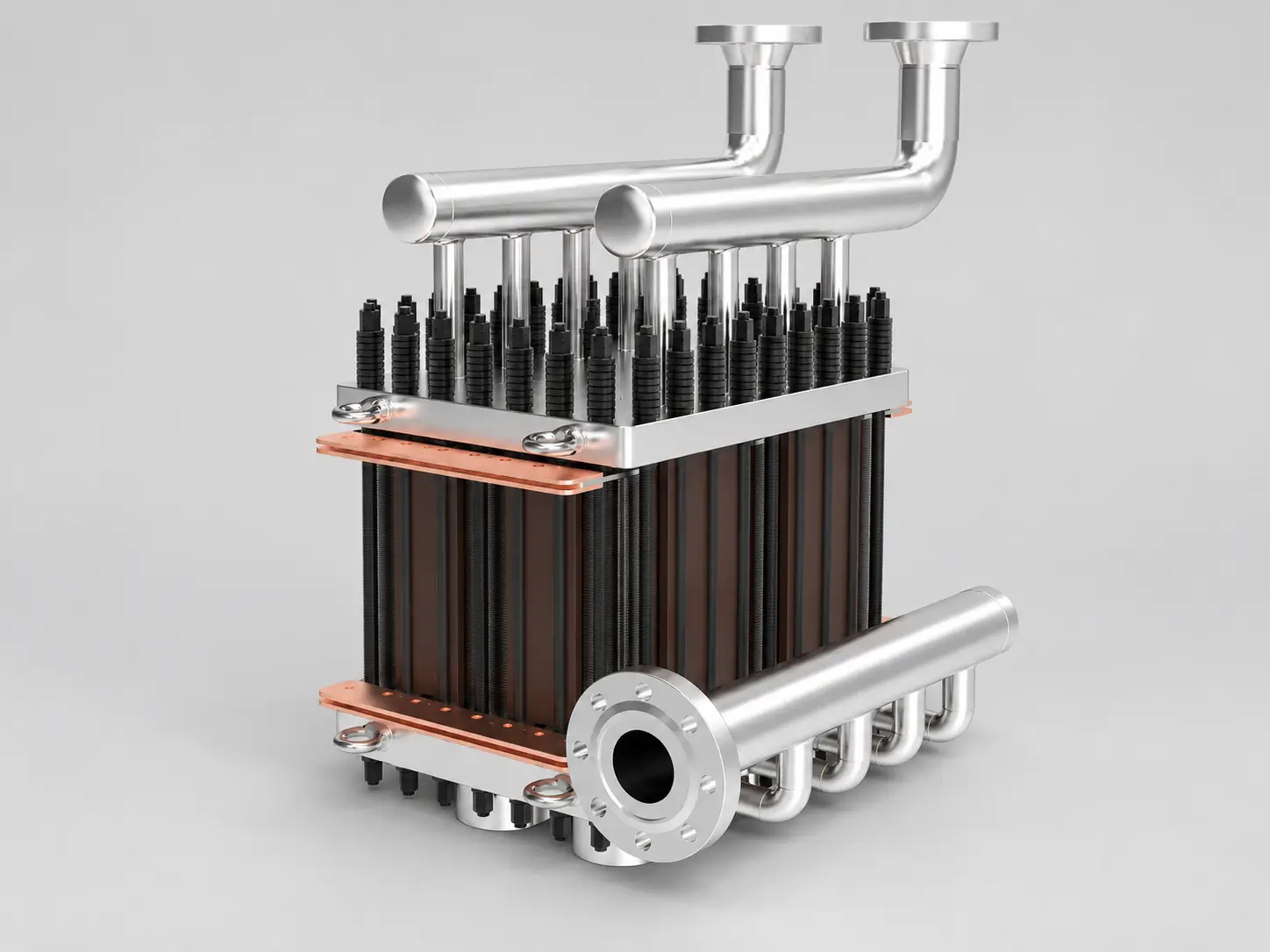
Industrial Stack Family
50–300 Nm³/h
Published reference model outputs: 50, 60 and 200 Nm³/h. The family limit is not an individual model rating.
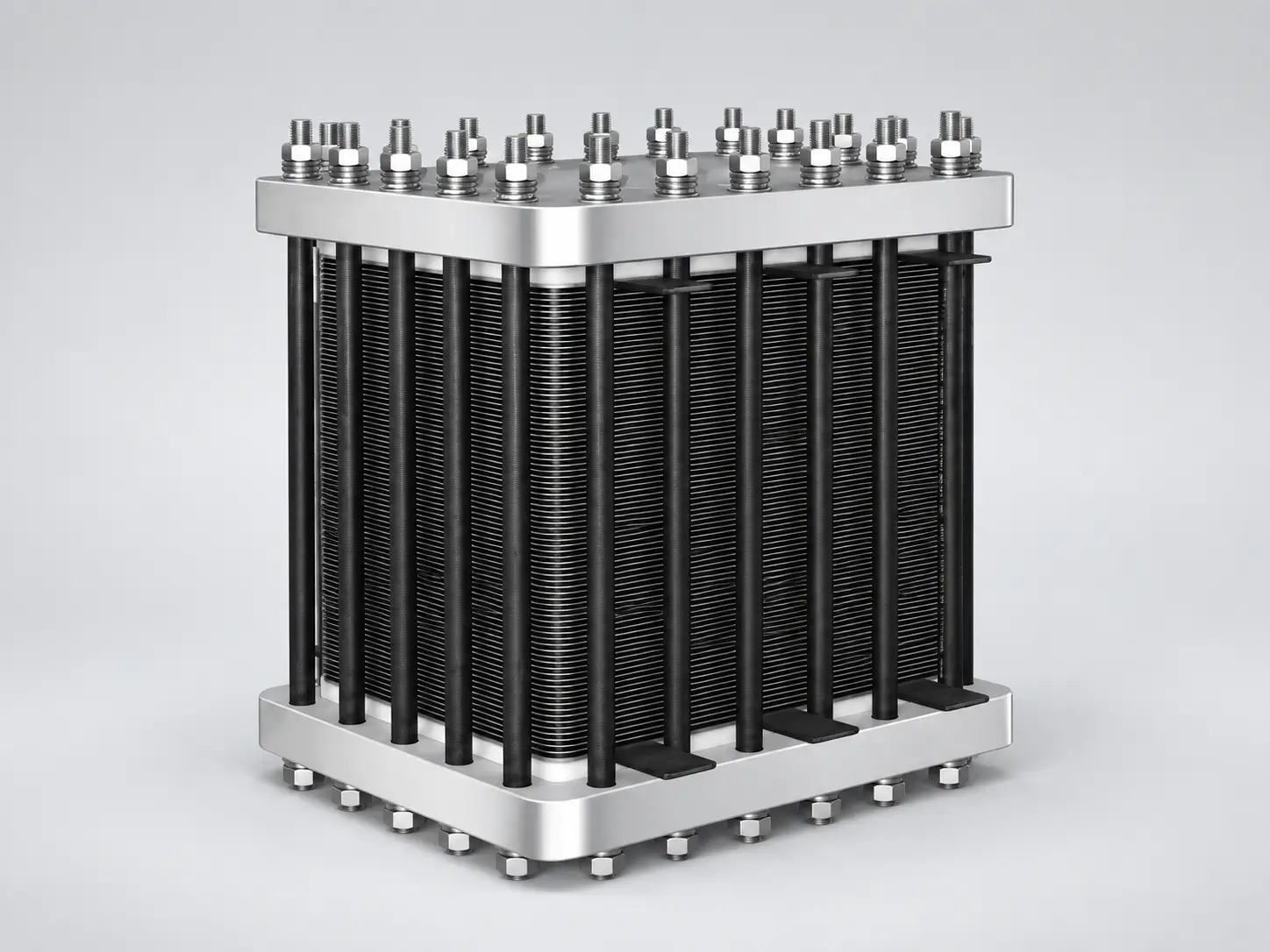
Medium-Capacity Stack Family
1–10 Nm³/h
Published reference outputs: 1, 2, 3, 4, 5 and 10 Nm³/h.
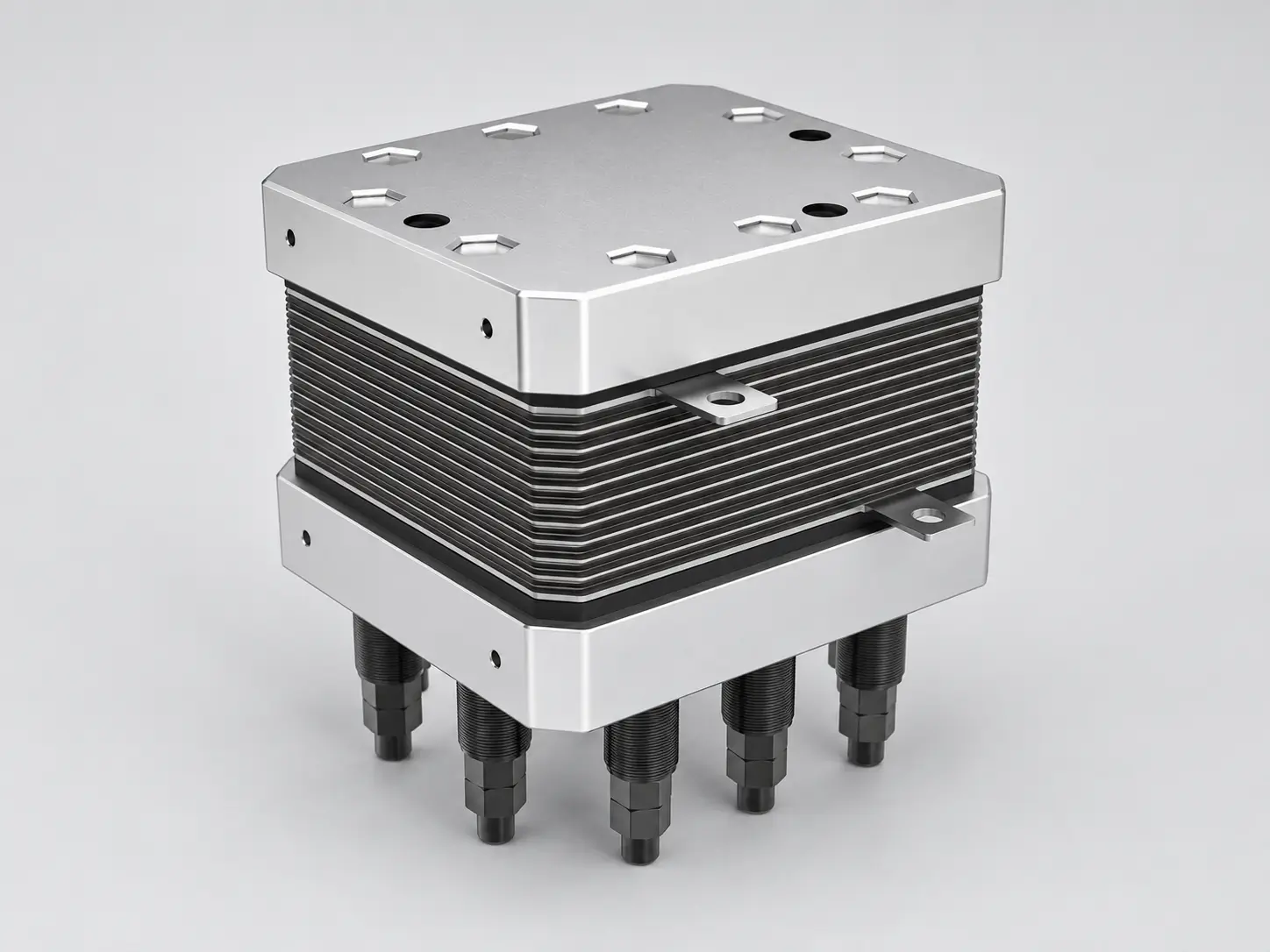
Compact Stack
0.6 Nm³/h
A compact module reference for an engineered generation package.
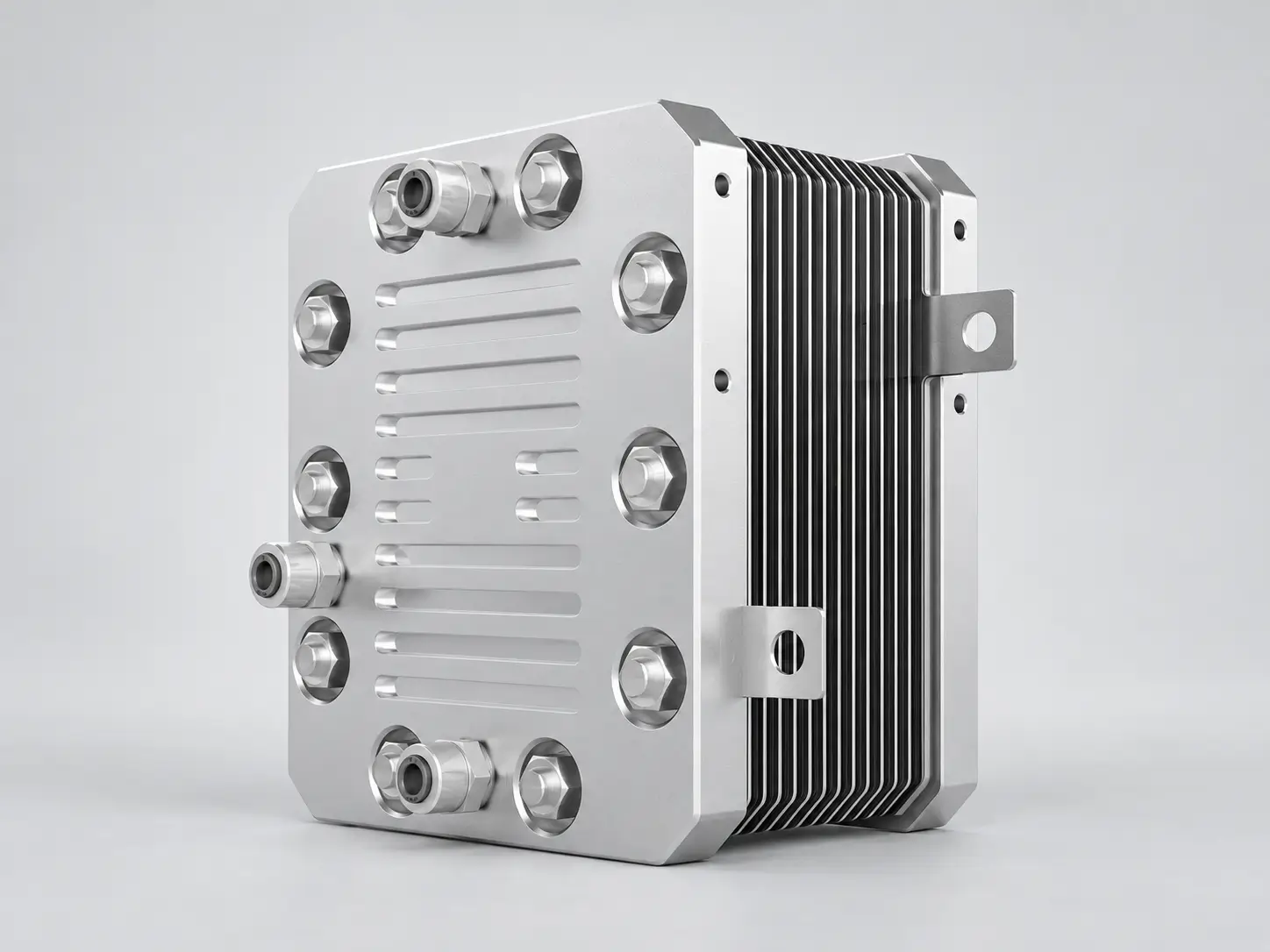
High-Flow Small Modules
3200–5000 mL/min
Reference outputs: 3200 and 5000 mL/min.
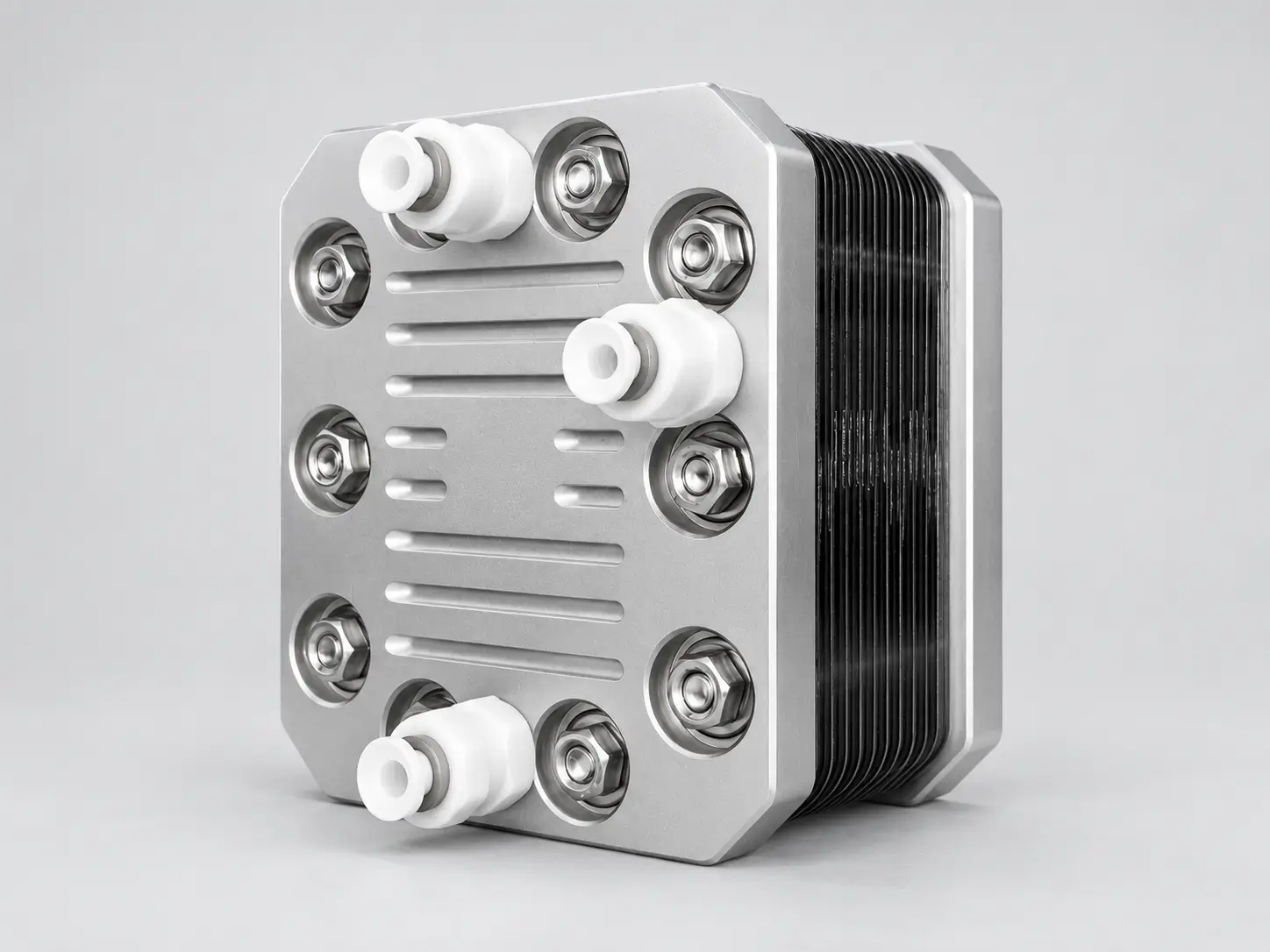
Small Stack Modules
1200–2000 mL/min
Compare the selected module’s electrical and fluid interfaces.
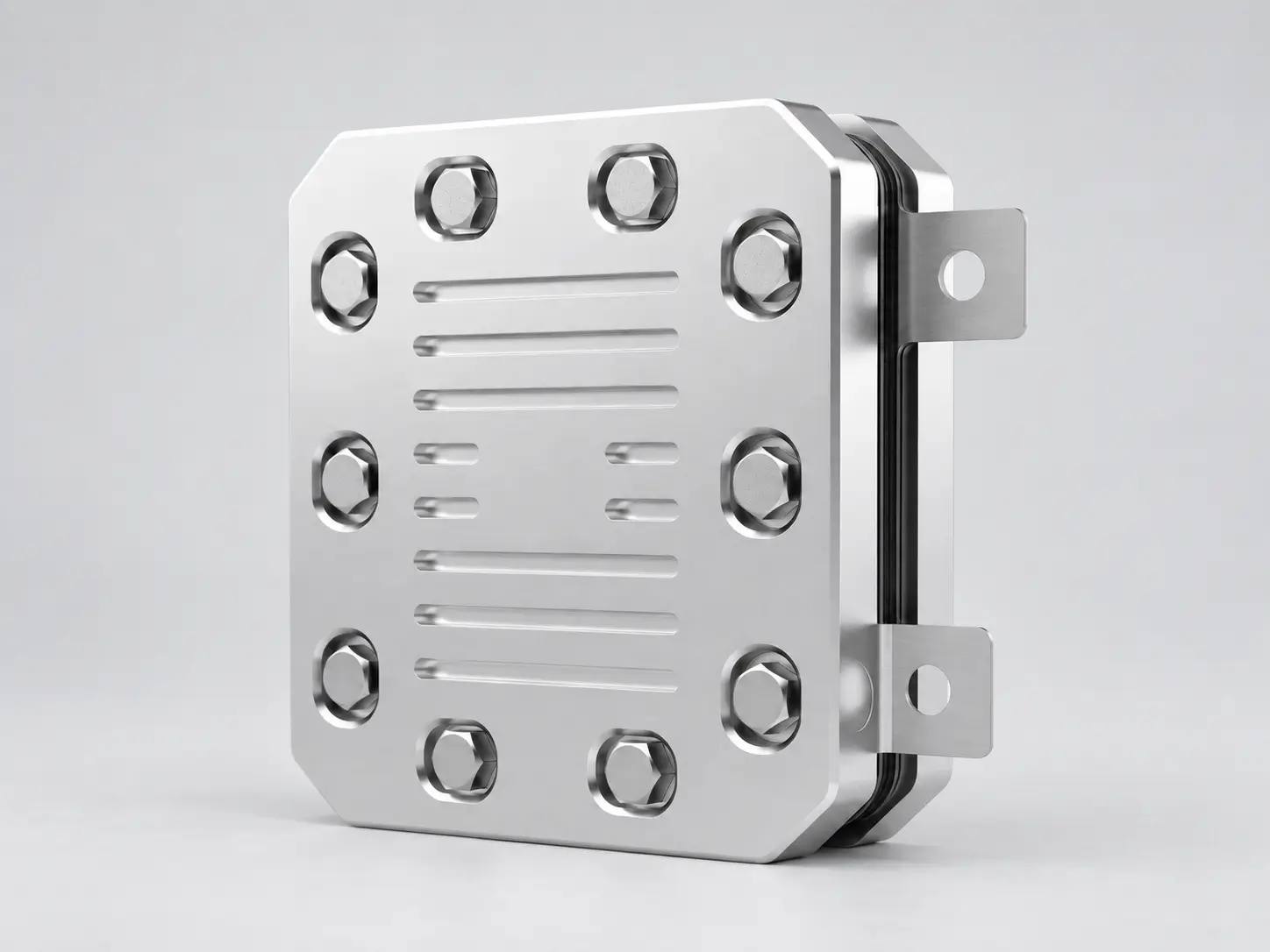
Low-Flow Stack Modules
600–1000 mL/min
Reference outputs: 600, 800 and 1000 mL/min.
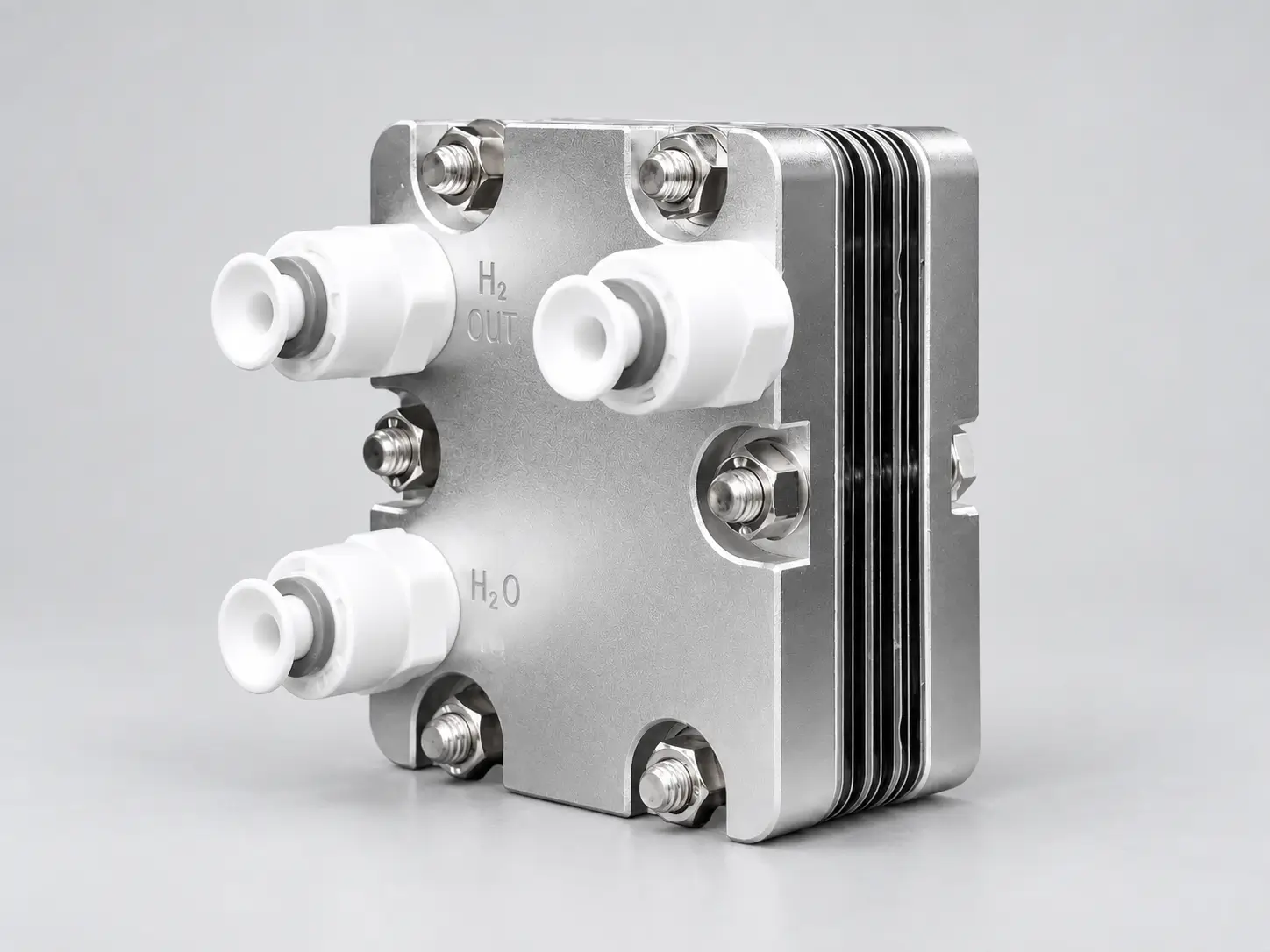
Miniature Stack Modules
300–450 mL/min
Reference outputs: 300, 400 and 450 mL/min.
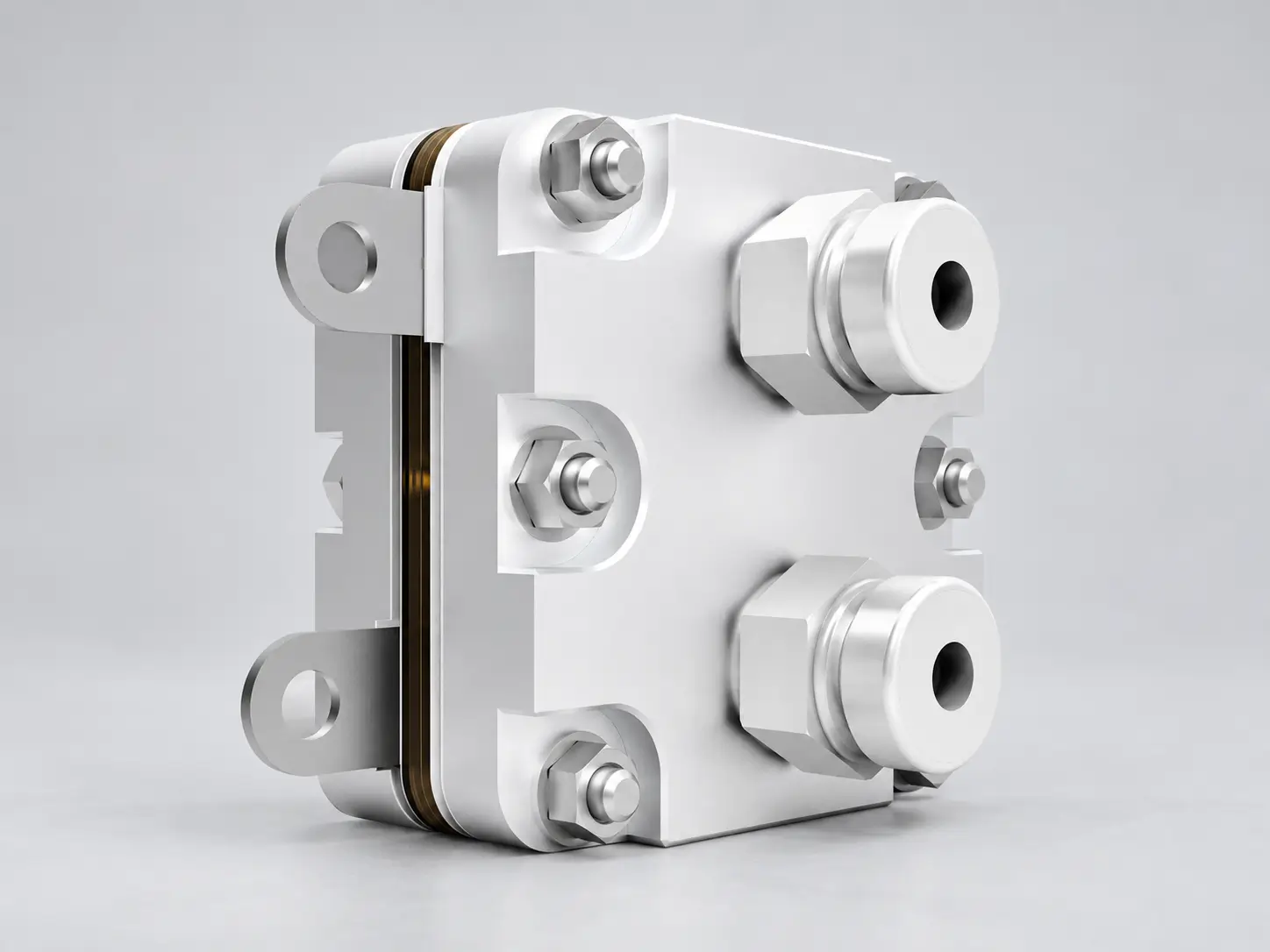
Micro-Flow Stack Modules
40–200 mL/min
Reference outputs: 40, 60, 100, 150 and 200 mL/min.
TECHNICAL DETAILS
Define the engineering specification.
Reference data for configuration review. The accepted quotation and approved technical specification define the supplied equipment.
| Decision group | Define before design freeze | Typical evidence |
|---|---|---|
|
Hydrogen / electrical |
Output, reference conditions, current/voltage/power, density denominator, duty and degradation basis |
Polarization/performance data under stated conditions |
|
Cell architecture |
Active area, cell count, MEA/PTL/bipolar-interface specification and stack revision |
Drawing, BOM/specification and traceability as ordered |
|
Pressure / fluids |
H₂/O₂ pressure, differential, water flow/quality, temperature, manifolds and purge/drain |
Pressure/leak and flow-interface evidence |
|
Mechanical |
Compression, tie rods, end plates, seals, envelope, supports, ports and service access |
Approved GA/interface drawing and inspection |
|
OEM interface |
Terminals, sensors, insulation, cooling, control/protection, transport and installation |
ICD, inspection/test plan and release documents |
Configuration note. A stack is not a complete hydrogen generator. Family ranges do not establish an individual model rating. Confirm reference gas conditions, power, pressure differential and balance-of-plant requirements.
APPLICATIONS
Where this configuration fits.
OEM hydrogen generators
Stack integration in a manufacturer’s own generation platform.
Research and pilot systems
Documented operating conditions for electrolysis evaluation.
Industrial hydrogen projects
Larger modules with project-specific fluid, power and control interfaces.
BEFORE YOU REQUEST A QUOTE
Prepare a useful equipment brief.
01 / Electrical interface
Current, voltage, power supply, duty cycle and protection
02 / Water and thermal
Water specification, circulation, temperature and cooling
03 / Gas and pressure
Gas outlets, pressure differential, separation and conditioning
04 / Mechanical interface
Envelope, mounting, terminals, connections and service access
BUYER QUESTIONS
Questions before specification.
Can a stack generate hydrogen without supporting equipment?
No. It requires the power, water, thermal, gas-handling and control systems defined by its approved operating specification.
Are maximum series output and individual model ratings interchangeable?
No. A family range is not a list of qualified model ratings. Use the exact module specification in the proposal.
How should gas purity be compared?
Specify the sampling point, drying or purification configuration, analytical method and operating conditions for each offer.
What should an OEM send first?
Send the hydrogen requirement, electrical envelope, water and cooling conditions, interface drawings and qualification plan.
NEXT STEP / CONFIGURATION REVIEW
Tell us what the equipment needs to do.
Send your application, destination country and technical requirements. Include the delivery target and any drawings or procurement specification so the proposed scope can be reviewed against your project.
Please name the product family in your enquiry. Final technical values, documentation and delivery terms belong in the approved quotation.
Your enquiry checklist
- Electrical interface: Current, voltage, power supply, duty cycle and protection
- Water and thermal: Water specification, circulation, temperature and cooling
- Gas and pressure: Gas outlets, pressure differential, separation and conditioning
- Mechanical interface: Envelope, mounting, terminals, connections and service access
RELATED EQUIPMENT